


For decades, the "perfect" summer was defined by a single image: golden sand, turquoise water, and a relentless, baking sun. From the Mediterranean coast to the tropical islands of Southeast Asia, summer travel was synonymous with heat. However, as global temperatures reach record highs and urban heatwaves become more frequent, a new travel movement is chilling the traditional tourism industry. Welcome to the era of coolcationing. While beach vacations have long defined the season, extreme weather is pushing travelers to rethink their plans and prioritize "thermal comfort" over a deep tan.
What is Coolcationing? Defining the New Chill
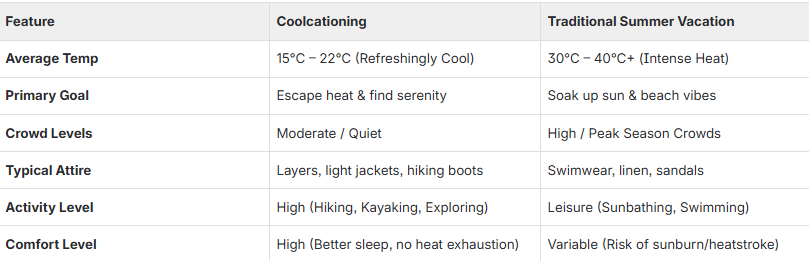
If you are wondering what is coolcationing, the answer is in the name: a portmanteau of "cool" and "vacation." The coolcation meaning refers to the growing preference for traveling to temperate or cold-weather climates during the traditional summer months (June to August in the Northern Hemisphere). Instead of seeking the hottest spots on the map, "coolcationers" head toward the mountains, fjords, and northern latitudes where the air is crisp and the landscapes are lush. This coolcation trend is climate-centric, focusing on destinations like Scandinavia, Iceland, and Canada to avoid the physical exhaustion of extreme summer heat.
The Traditional Summer Vacation: The Sun-Drenched Standard
To understand the shift, we must look at the classic summer vacation. For generations, the goal was simple: find the sun. Traditional summer trips revolve around tropical islands, the Mediterranean, and coastal resorts. The itinerary usually includes water sports, outdoor dining until midnight, and spending as much time as possible in swimwear. While beautiful, these destinations are increasingly facing "overtourism" and temperatures that can reach 40°C, making being outdoors during the day a health risk rather than a joy.
Coolcationing vs. Summer Vacation: The Ultimate Comparison
Choosing between these two depends on your heat tolerance and what you want to get out of your time off. Here is how they stack up in a side-by-side comparison:
Why is Coolcationing Becoming a Major Trend?
The shift isn't just a niche whim; it’s a response to a changing planet. In 2026, several factors are driving this:
- Climate Change: Record-breaking heatwaves in Europe and Asia have made traditional sightseeing dangerous.
- Wellness & Sleep Tourism: It is difficult to have a "restful" vacation when it’s too hot to sleep. Coolcationing allows for better circadian rhythms and physical recovery through fresh, oxygen-rich air.
- Social Media Appeal: Gen Z and Millennial travelers are moving away from "generic beach photos," opting for the moody, mist-covered aesthetic of northern highlands.
Who Should Choose Which Path?
Choose Coolcationing if you travel with children or the elderly, as high heat is dangerous for vulnerable groups. It is also ideal for digital nomads who need a cool environment to remain productive, or adventure travelers who prefer hiking 15km in 18°C weather rather than a sweltering 35°C. Stick to Summer Beach Trips if you live in a cold climate year-round and genuinely need the Vitamin D, or if you are a water sports enthusiast who requires warm coastal waters for diving and surfing.
Best Coolcation Destinations to Consider for 2026
If you're looking for summer vacation alternatives, consider these "cool" hotspots:
- Norway: For breathtaking fjords and the 24-hour Midnight Sun.
- Iceland: Glaciers, waterfalls, and temperatures that rarely exceed 15°C.
- Scotland: Mist-covered highlands and cozy evenings by a peat fire.
- Switzerland: Alpine lakes that are crystal clear and perfect for a refreshing dip.
- Hokkaido, Japan: A lush, floral escape from the sweltering humidity of Tokyo.
7. Planning Tips: Staying Connected on Either Path
Regardless of whether you choose a misty mountain or a sun-drenched shore, modern travel requires a digital lifeline. From checking real-time weather alerts in the Swiss Alps to booking a beach-side taxi, your internet connection is your most important tool. However, in remote coolcation spots or crowded beach resorts, local networks can be unpredictable.
To navigate these changes, Supera Care by Superalink offers a fail-safe connectivity solution. Our eSIMs connect to the strongest available local network, ensuring you can access maps and safety info in the wild or the city. If your connection fails or local network restrictions occur, Supera Care provides compensation and technical support to get you back online. This protection is FREE for all plans of 3+ days (web) or 4+ days (partners).
Frequently Asked Questions (FAQ)
- Does "coolcationing" mean I have to go somewhere snowy? Not at all. The trend focuses on avoiding extreme heat. Most destinations sit comfortably between 15°C and 22°C—perfect for a light jacket, but not heavy winter gear.
- Is coolcationing more expensive than a beach trip? While countries like Switzerland or Norway have higher living costs, you may find accommodation prices more stable since these aren't "peak" sun-seeker zones.
- What should I pack for a coolcation? Layering is key. Bring breathable base layers, a waterproof windbreaker, and sturdy walking shoes.
- Is an eSIM safe in regions with strict internet laws? Yes. Superalink eSIMs operate via official telecom channels that comply with local regulations, making them safer and more stable than "grey-market" SIM cards.
The Future of Summer is Cool
There is no right or wrong way to spend your summer. However, as we move through 2026, the coolcation meaning will continue to expand as more people realize that "summer" doesn't have to mean "sweating." Whether you stick to the traditional sun or embrace the rising coolcation trend, the goal remains the same: to find a place where you can breathe, relax, and reconnect.